
Visual Guide to Custom Home Ceiling Treatments

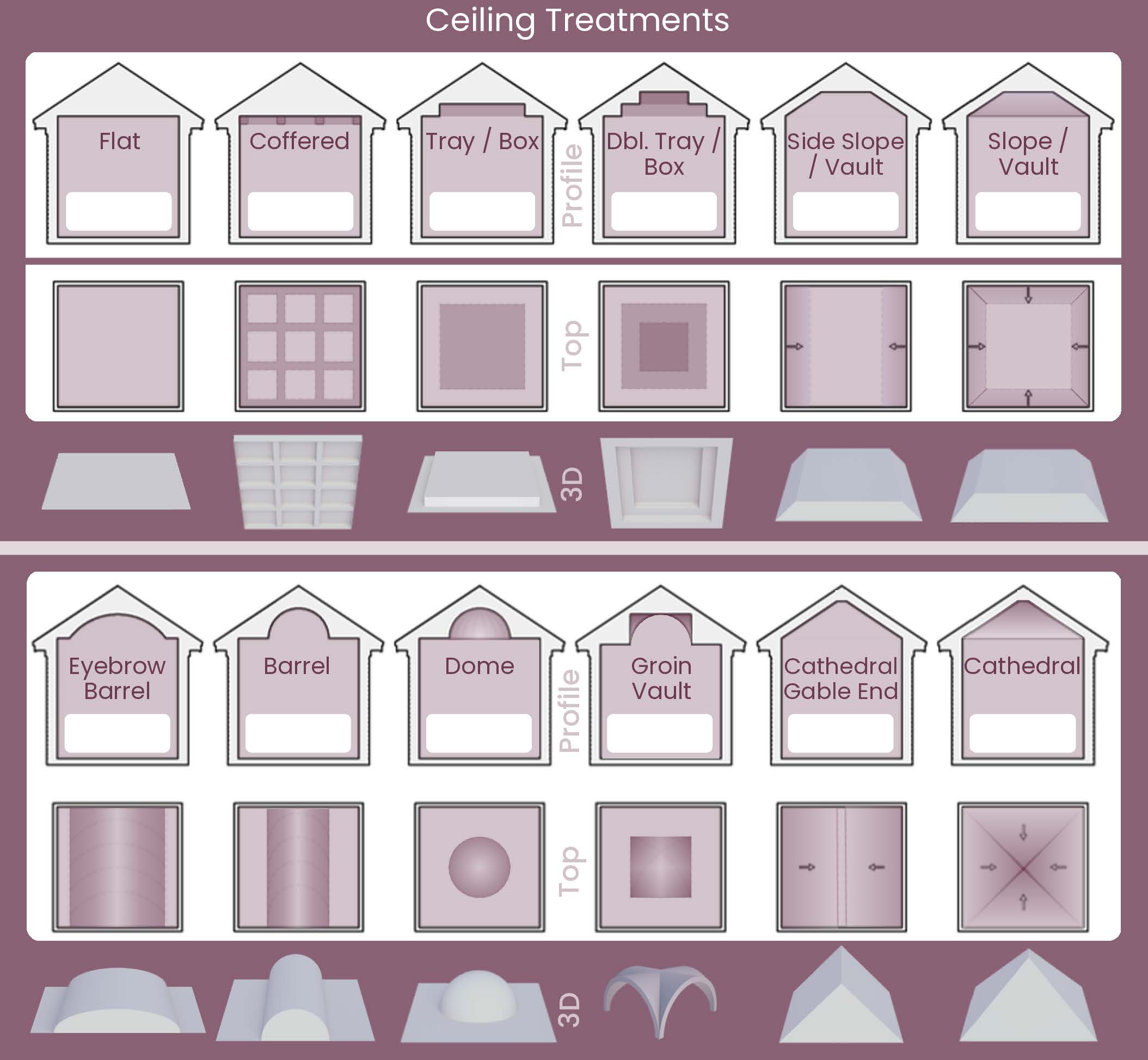
Custom Home Ceiling Treatments: Elevating Space from the Top Down
When designing a custom home, ceilings are often overlooked in favor of finishes, cabinetry, and layout. But ceiling treatments play a major role in defining a home’s character, scale, and sense of craftsmanship. From simple flat ceilings to dramatic vaulted forms, the right ceiling choice can elevate a space both visually and experientially.
Below is an overview of common custom home ceiling treatments, how they’re used, and where they shine.
Flat Ceilings
Clean, efficient, and timeless
Flat ceilings are the most straightforward option and remain a solid choice for many spaces. They provide clean lines, predictable construction costs, and work well in bedrooms, secondary spaces, and modern designs where simplicity is the goal.
Best for: Bedrooms, offices, modern or minimalist homes
Design tip: Detail matters—use trim, lighting, or material changes to avoid a “builder-basic” feel.
Coffered Ceilings
Structured elegance with depth
Coffered ceilings feature a grid of beams or recessed panels that add dimension and architectural rhythm. They bring formality and visual weight to a space and are often used as a focal feature.
Best for: Living rooms, great rooms, studies, dining rooms
Design tip: Keep beam proportions balanced to the room size—oversized coffers can overwhelm.
Tray / Box Ceilings
Subtle elevation without major cost
Tray (or box) ceilings step up from the wall line, creating the illusion of height. They’re a popular upgrade that adds interest without major structural changes.
Best for: Primary bedrooms, dining rooms, living areas
Design tip: Indirect lighting in the tray adds warmth and depth.
Double Tray / Box Ceilings
More drama, more presence
A double tray ceiling adds a second step or layer, increasing depth and visual impact. It’s a great way to elevate important spaces while maintaining a clean, refined look.
Best for: Primary suites, formal dining rooms
Design tip: Keep ceiling heights generous so the detail doesn’t feel compressed.
Side Slope / Vault – Two Sides
Simple vault with directional emphasis
This vaulted ceiling slopes upward from two opposing walls, creating openness while maintaining symmetry. It’s less complex than full vaults but still impactful.
Best for: Living rooms, bonus rooms
Design tip: Works well with exposed beams or centered lighting features.
Slope / Vault – All Sides
Airy and expansive
Sloping on all sides, this vault draws the eye upward and creates a strong sense of volume. It’s commonly used in great rooms and open-concept spaces.
Best for: Great rooms, open living/kitchen areas
Design tip: Coordinate roof structure early—this ceiling affects exterior massing.
Eyebrow Barrel Ceilings
Soft curves with architectural flair
An eyebrow barrel is a partial curved ceiling often used to highlight a transition or focal point. It adds sophistication without dominating the entire room.
Best for: Entries, hallways, niches
Design tip: Accent lighting enhances the curve and craftsmanship.
Barrel Ceilings
Classic and elegant curvature
Barrel ceilings run in a continuous curve from one wall to the other. They add height, softness, and old-world character.
Best for: Hallways, galleries, dining rooms
Design tip: Ideal for stucco, plaster, or wood finishes.
Dome Ceilings
Grand and ceremonial
Dome ceilings create a dramatic focal point and are often reserved for statement spaces. They convey luxury and architectural intention.
Best for: Foyers, formal living spaces
Design tip: Scale is everything—domes need room to breathe.
Groin Vault Ceilings
Intersecting arches with historic roots
Formed by two barrel vaults crossing at right angles, groin vaults feel timeless and refined. They add depth and complexity to a space.
Best for: Hallways, dining rooms, transitional spaces
Design tip: Best suited for traditional or European-inspired designs.
Cathedral Ceiling – Gable End
Classic cathedral with a focal wall
This ceiling slopes symmetrically toward a central ridge and terminates at a gable wall, often featuring windows or a fireplace.
Best for: Living rooms, great rooms
Design tip: Align windows, beams, and fireplace for strong visual symmetry.
Cathedral Ceiling – All Sides
Maximum volume and light
Cathedral ceilings sloping on all sides create an expansive, airy environment. They’re ideal for homes that emphasize openness and connection to views.
Best for: Great rooms, primary living spaces
Design tip: Coordinate HVAC and lighting early to avoid visual clutter.
Final Thoughts
Ceiling treatments are more than an upgrade—they’re an opportunity to reinforce architectural style, define key spaces, and enhance the overall experience of a custom home. Thoughtful ceiling design, coordinated early in the planning process, leads to cleaner construction, better proportions, and more satisfied clients.
When in doubt, design from the ceiling down—the results speak for themselves.
Visit our YouTube page to see all ceiling treatment animations.

Or join us on Facebook.